
Good posture is often presented as the solution to sitting discomfort. While posture matters, it is only part of the picture. Even a well-supported position becomes uncomfortable when held for too long.
This overview explains why the body struggles with static sitting, how discomfort builds over time, and why movement and breaks are essential for long-term comfort at a desk.
Why static sitting causes discomfort
The human body is designed for movement. When sitting becomes static, muscles remain lightly engaged, joints stay loaded, and circulation slows.
This leads to:
- Gradual muscle fatigue
- Pressure buildup in joints and soft tissue
- Reduced blood flow
- Increasing stiffness over time
Because these effects accumulate slowly, discomfort often appears without a clear cause.
Why “good posture” still breaks down
Even with a supportive chair and well-aligned desk, posture is not meant to be held indefinitely.
Over time:
- Muscles tire and stop providing support
- The body subtly shifts to compensate
- Small posture changes create new pressure points
- Tension migrates to other areas
Posture works best as a starting position, not a permanent one.
Static sitting vs supported movement
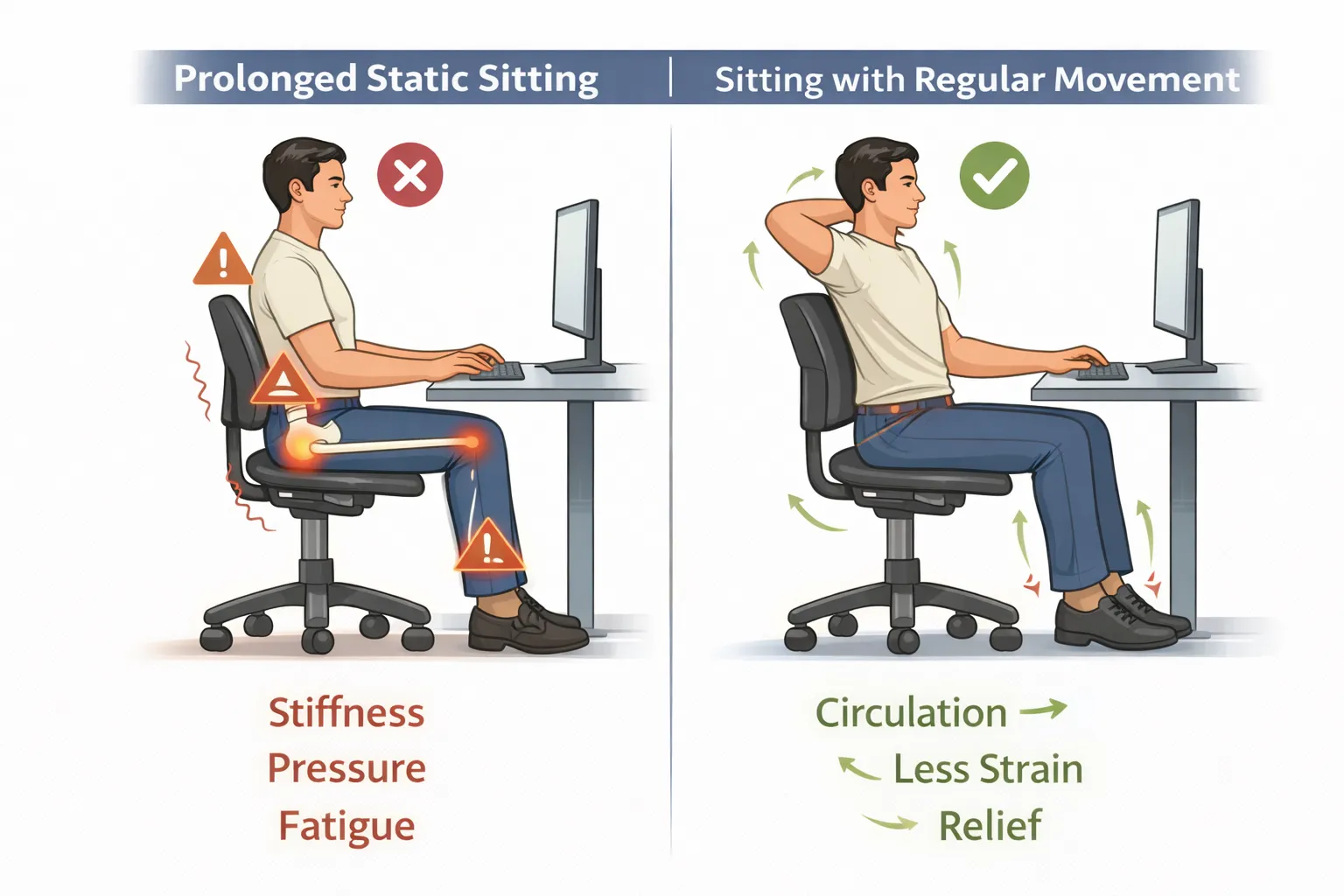
Comfort improves when sitting allows regular changes in position. These changes do not need to be large or deliberate to be effective.
Examples include:
- Shifting weight slightly
- Changing leg position
- Adjusting arm or shoulder posture
- Standing briefly between seated periods
Small movements help distribute load and reduce fatigue.
Breaks as part of ergonomics, not productivity
Breaks are often framed as productivity tools. Ergonomically, their role is simpler: they allow the body to reset.
Breaks help:
- Restore circulation
- Relieve sustained muscle effort
- Reduce joint compression
- Prevent strain from accumulating unnoticed
From an ergonomic perspective, breaks are preventative, not corrective.
Micro-movements matter
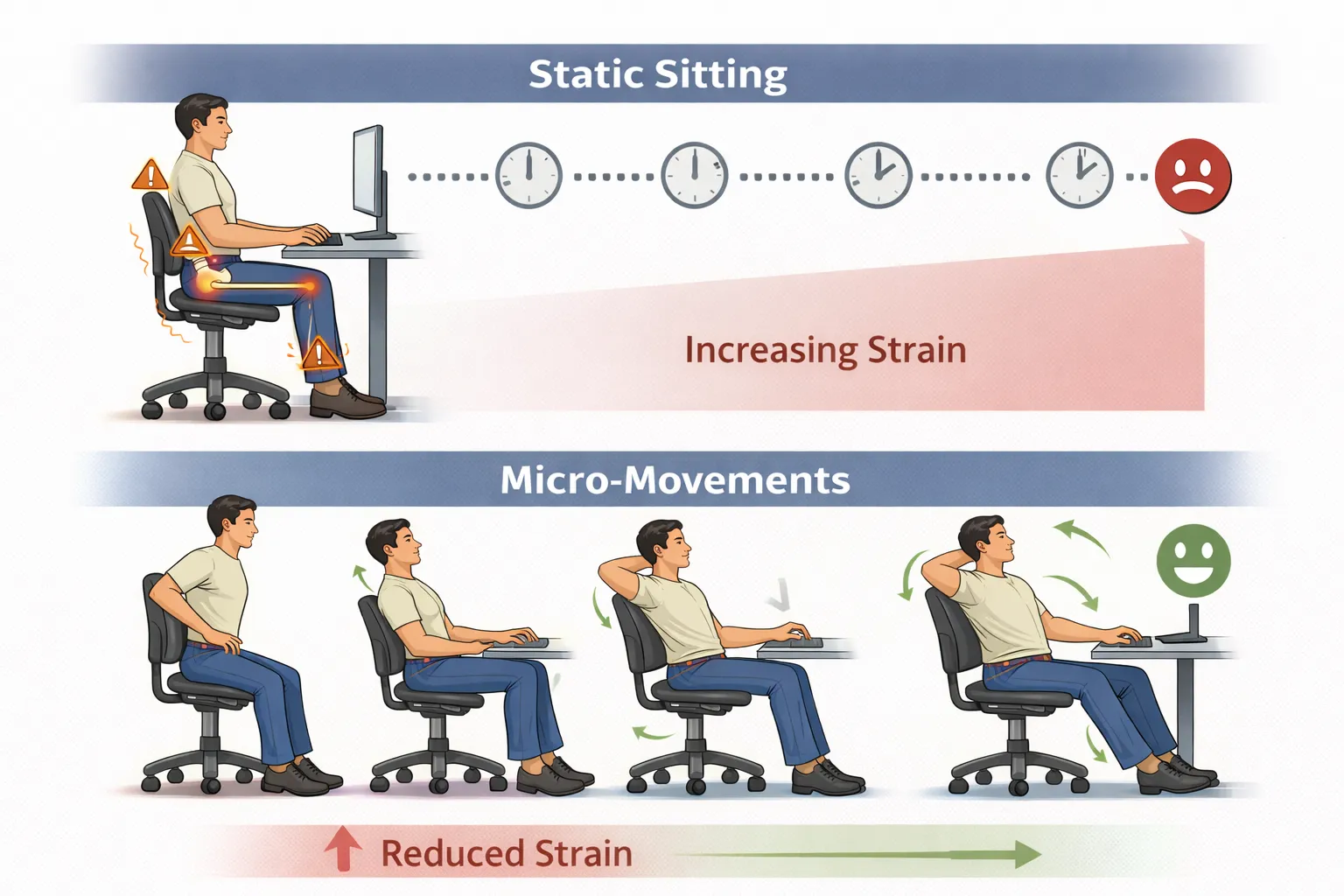
Not all movement requires leaving the desk. Micro-movements — small, frequent adjustments — play a significant role in comfort.
Examples include:
- Repositioning the feet
- Rolling the shoulders
- Leaning back briefly
- Shifting sitting depth
These movements reduce static load without disrupting work.
How movement fits into the full ergonomic system
Movement works best when combined with:
- Supportive sitting
- Balanced desk height
- Relaxed upper-body positioning
- Stable lower-body support
When the setup allows movement easily, the body moves naturally. When it does not, people tend to remain still longer than is comfortable.
What to focus on next
If discomfort returns even with a good setup, movement is often the missing piece.
Rather than forcing posture, consider:
- Whether your setup allows easy position changes
- Whether you can stand or walk briefly without friction
- Whether your body feels better after small movements
The Guides below explain how to support these principles with practical adjustments: