Lower-body ergonomics forms the foundation of comfortable sitting, yet it is often overlooked. When hips, legs, knees, or feet are poorly supported, the body compensates quietly—often leading to discomfort elsewhere, such as the lower back or shoulders.
This overview explains how lower-body ergonomics works as a connected system, and why discomfort below the desk can affect how your entire body feels while sitting.
Why lower-body discomfort builds quietly
Lower-body discomfort usually develops slowly rather than suddenly. Because the legs and feet do not actively work during desk tasks, strain often goes unnoticed until fatigue or stiffness appears.
This commonly happens when:
- Hips are positioned too high or too low
- Knees remain compressed or unsupported
- Feet do not make stable contact with the floor
- Circulation is subtly restricted over long periods
At first, these positions may feel acceptable. Over time, the body shifts weight, posture changes, and tension spreads upward.
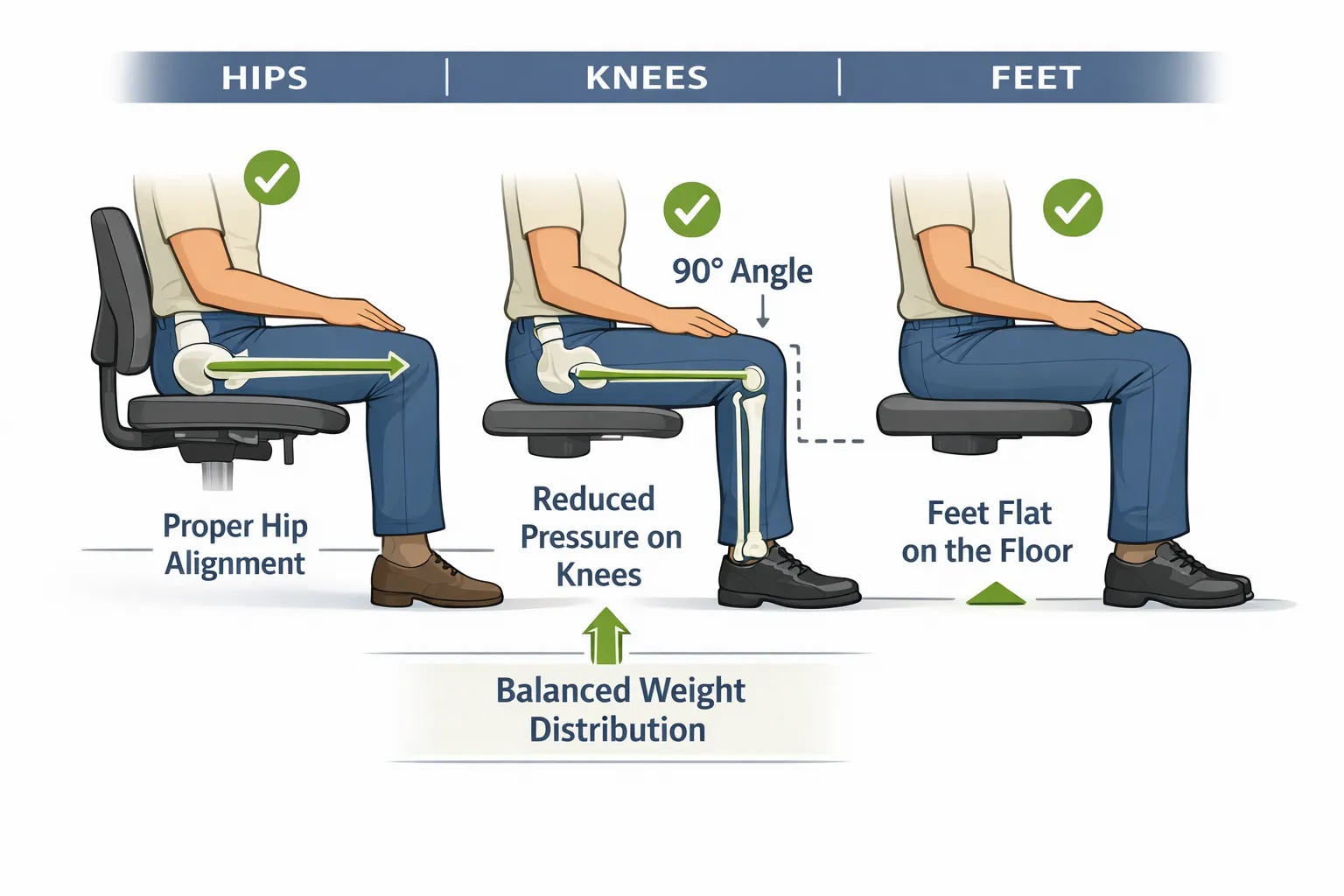
Hips: the foundation of seated posture
Hip position determines how the rest of the body balances while sitting.
When hips are well supported:
- Weight is distributed evenly
- The spine can remain neutral
- Legs rest naturally without effort
When hips are poorly positioned:
- Muscles stay partially engaged
- The pelvis tilts forward or backward
- The lower back absorbs extra load
Small differences in hip height or seat support can significantly affect overall comfort.
Knee position and joint load
Knee position influences both joint comfort and circulation.
When knees are forced too high, too low, or pressed against the seat edge, strain builds gradually. This often leads to:
- Pressure behind the knees
- Reduced blood flow to the lower legs
- Subtle shifts in sitting posture
Balanced knee positioning allows weight to be shared between the seat and the feet, reducing stress throughout the lower body.
Feet support and stability
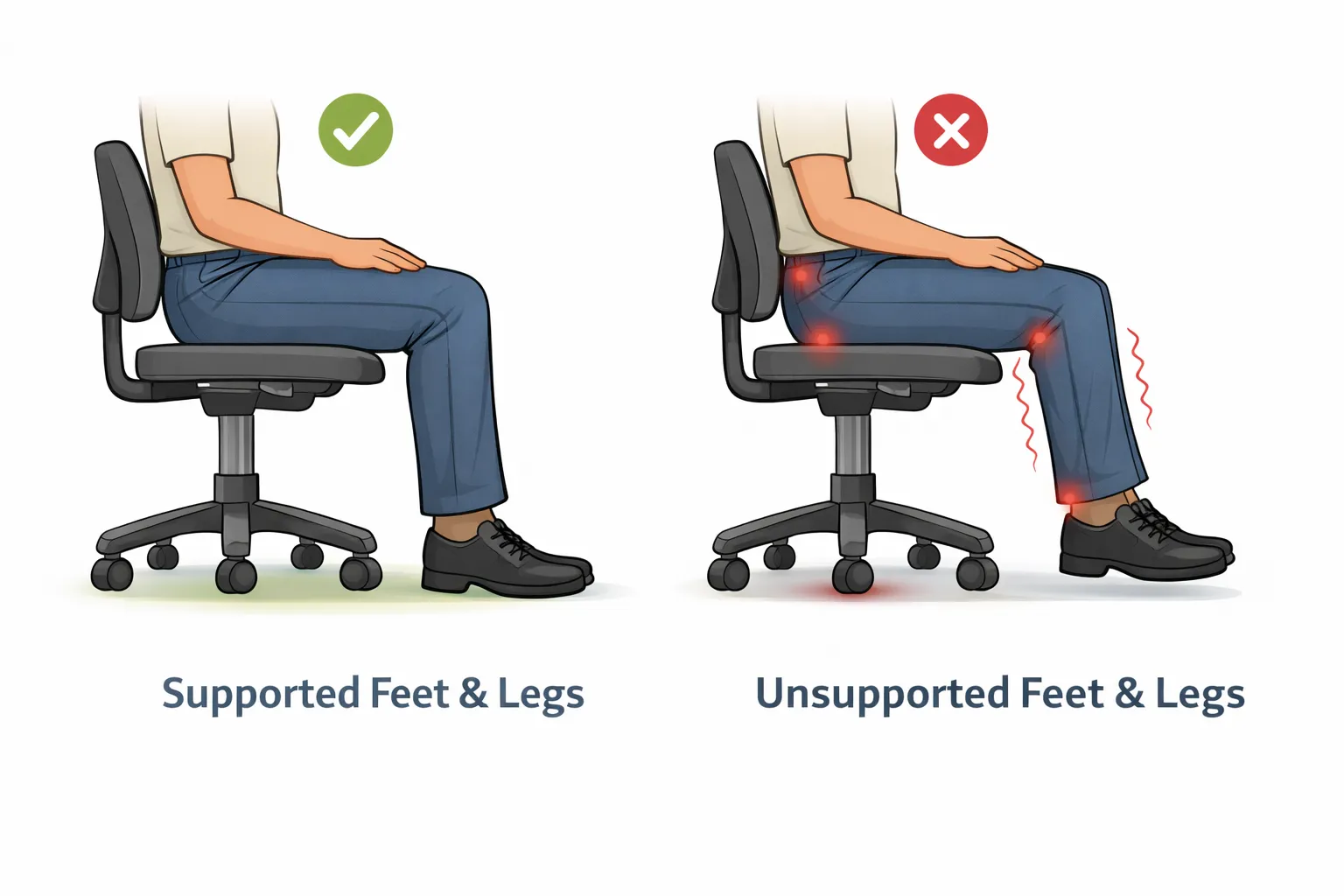
Feet provide grounding while seated. When they lack support, the body compensates by shifting weight into the hips or lower back.
Common signs of poor foot support include:
- Feet dangling or resting lightly on the floor
- Constant repositioning of the legs
- Pressure building in the thighs or lower back
Stable foot contact helps maintain balance, reduce muscle effort, and support healthy circulation during long sitting sessions.
Movement matters more than perfect positioning
Lower-body ergonomics is not about locking the legs into a single position.
Comfort improves when sitting allows:
- Small shifts in leg position
- Occasional weight changes
- Easy movement without effort
Static lower-body positioning increases pressure and fatigue, even when posture looks correct.
How lower-body ergonomics affects the whole setup
Lower-body positioning influences:
- Chair height choices
- Desk height comfort
- Upper-body tension levels
- Overall sitting endurance
When the lower body is unsupported, upper-body adjustments often fail to solve discomfort. A stable foundation allows the rest of the body to relax.
What to focus on next
If discomfort persists while sitting, consider whether your lower body is quietly compensating.
Rather than focusing only on the chair back or desk surface, think about:
- Whether your hips feel stable
- Whether your knees have space and support
- Whether your feet can rest comfortably
- Whether you can move naturally while seated
The Guides below explain how to apply these ideas step by step: