
An ergonomic office chair is often described as the foundation of a comfortable sitting setup. Yet many people struggle to explain what actually makes a chair ergonomic, especially when sitting for long hours.
This overview explains ergonomic office chairs in practical terms. It focuses on how support and adjustability work, and how chairs interact with your body over time. Rather than recommending products, the goal is to help you understand what matters, what does not, and how to think about your chair as part of a complete workstation.
What ergonomic really means for office chairs
An ergonomic chair is not defined by how it looks or how expensive it is. It is defined by how well it adapts to your body and supports you without forcing you into a rigid position.
Well-designed ergonomic chairs allow:
- Neutral, supported posture
- Relaxed shoulders and arms
- Even pressure distribution while seated
- Small, natural changes in position throughout the day
A chair that feels fine for a few minutes but uncomfortable after an hour is usually failing in support or adjustability rather than cushioning.
Key support areas in an ergonomic office chair
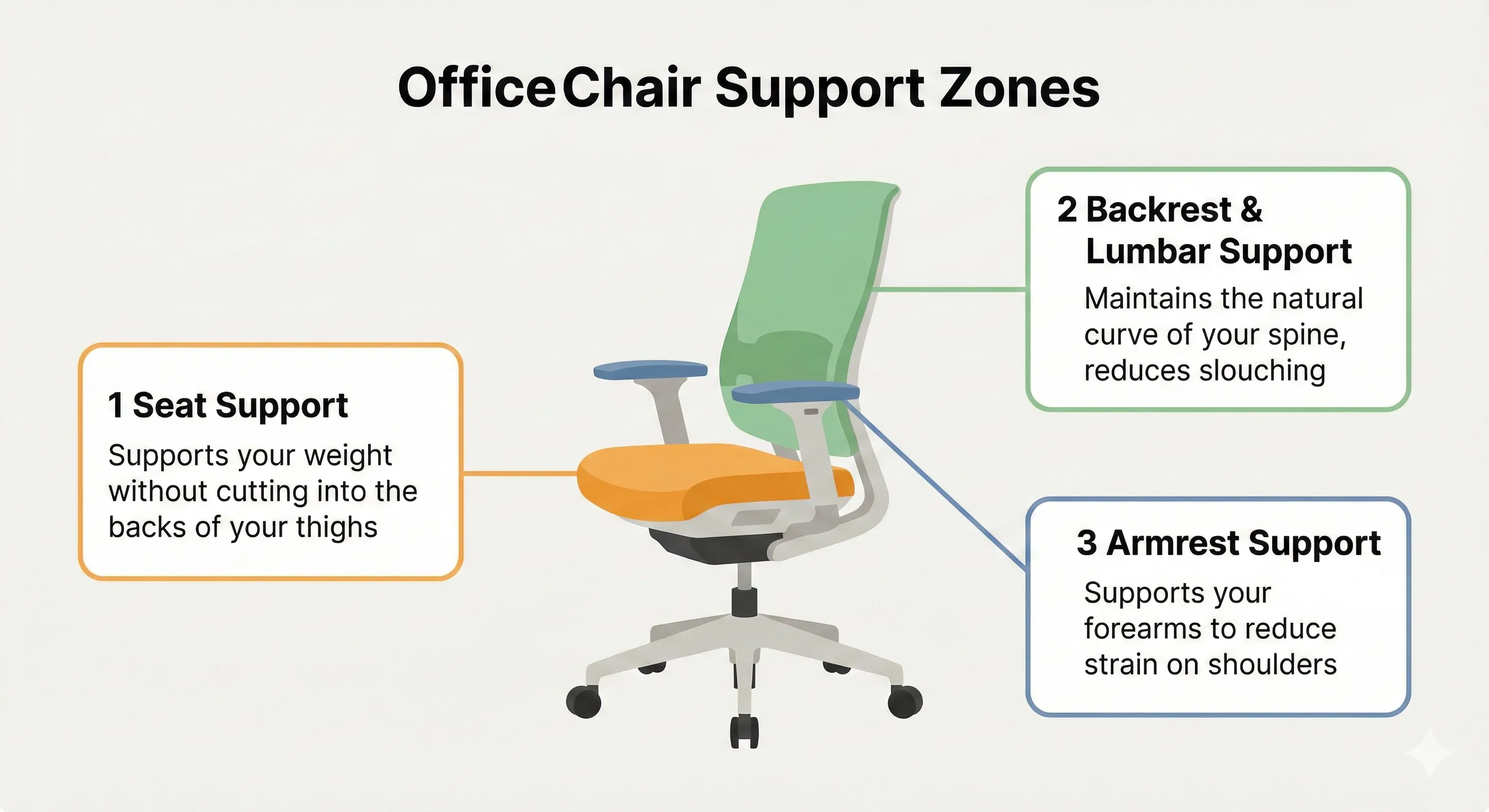
Ergonomic chairs support the body in specific zones instead of relying on a single padded surface.
Seat support
The seat should support your weight without cutting into the backs of your thighs. Seat depth matters more than softness. If the seat is too deep, back support is lost. If it is too shallow, pressure builds under the legs.
Backrest and lumbar support
The backrest should follow the natural curve of your spine, particularly in the lower back. Lumbar support helps maintain this curve and reduces the tendency to slump during long sitting sessions.
Armrest support
Armrests should support your forearms lightly without lifting your shoulders. Their role is to reduce arm weight on the shoulders, not to lock your arms into position.
Why adjustability matters more than comfort claims
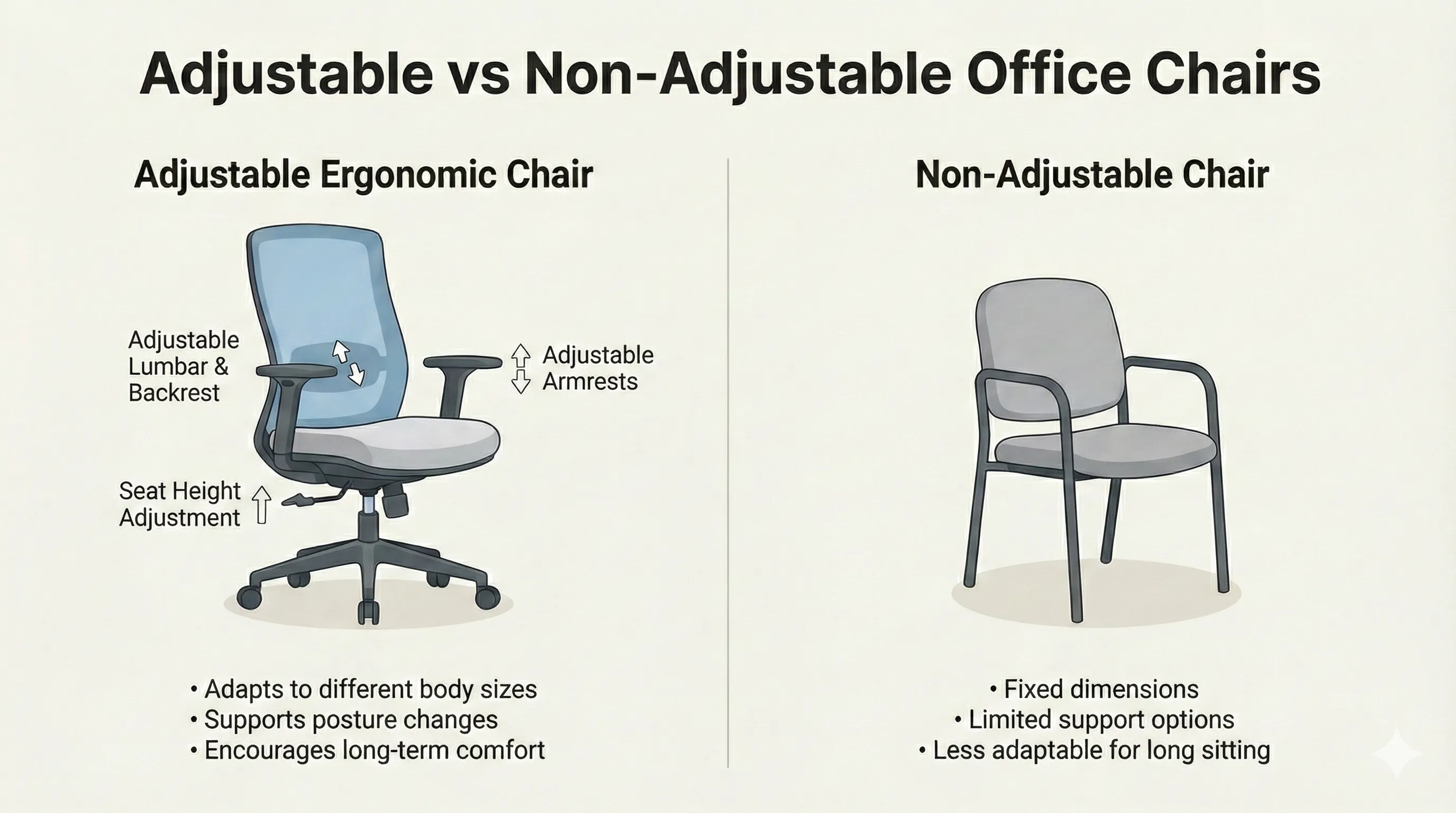
Two people of the same height can need very different chair setups. This is why adjustability is one of the most important ergonomic features.
Adjustable chairs allow changes to:
- Seat height and depth
- Backrest angle
- Lumbar position or firmness
- Armrest height and width
A chair that cannot be adjusted forces your body to adapt to it. An ergonomic chair adapts to you.
Sitting for long hours: support versus movement
Even the best ergonomic chair cannot make long, uninterrupted sitting healthy.
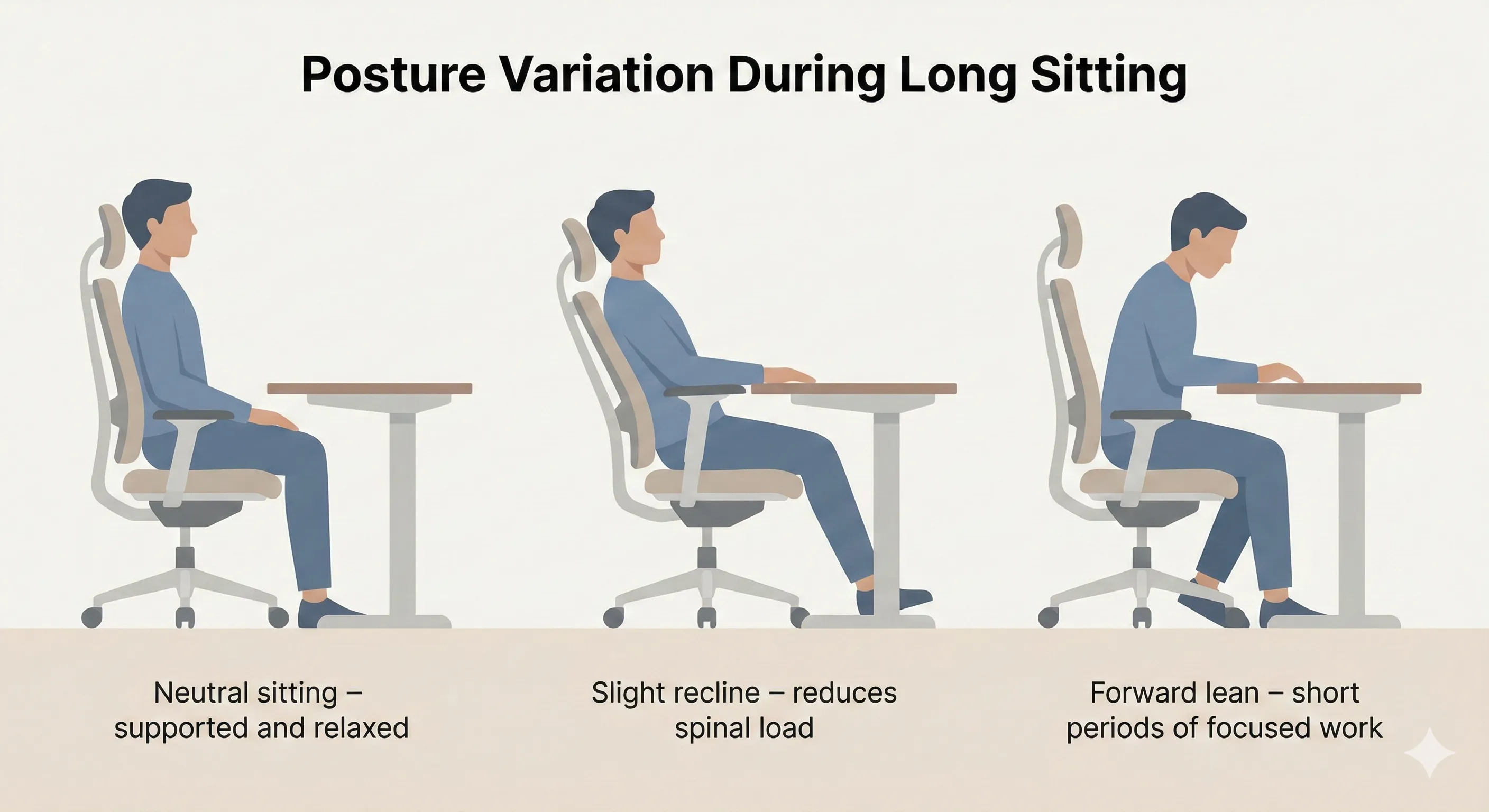
Ergonomic chairs are designed to support movement rather than eliminate it. Subtle posture shifts, leaning back occasionally, or changing leg position all help reduce fatigue and pressure buildup.
Comfortable long sitting comes from:
- Adequate support
- Regular micro-movements
- Periodic breaks away from the chair
This is why chair ergonomics should always be considered alongside desk height, monitor position, and daily movement habits.
How an ergonomic chair fits into your full setup
An office chair does not work in isolation. Its effectiveness depends on how it interacts with the rest of your workstation, including:
- Desk height
- Monitor position
- Keyboard and mouse placement
A well-adjusted chair makes it possible to set these other elements correctly and comfortably.
What to focus on next
If discomfort persists while sitting, consider whether your chair is quietly forcing your body to compensate.
Instead of focusing on appearance or cushioning, think about:
- Whether the chair can be adjusted to fit your body
- Whether support feels balanced over time
- Whether you can move naturally while seated
The Guides below explain how to apply these ideas step by step: