
Footrests are often suggested as a quick way to improve desk comfort, but they only help when they solve the right problem. In some setups, they make an immediate difference. In others, they simply compensate for something else that still needs adjustment.
This guide focuses on when a footrest is useful, when it isn’t, and how to choose the right type if you do need one. It assumes you are trying to improve lower-body support rather than chasing accessories for their own sake.
Why footrests can make a noticeable difference
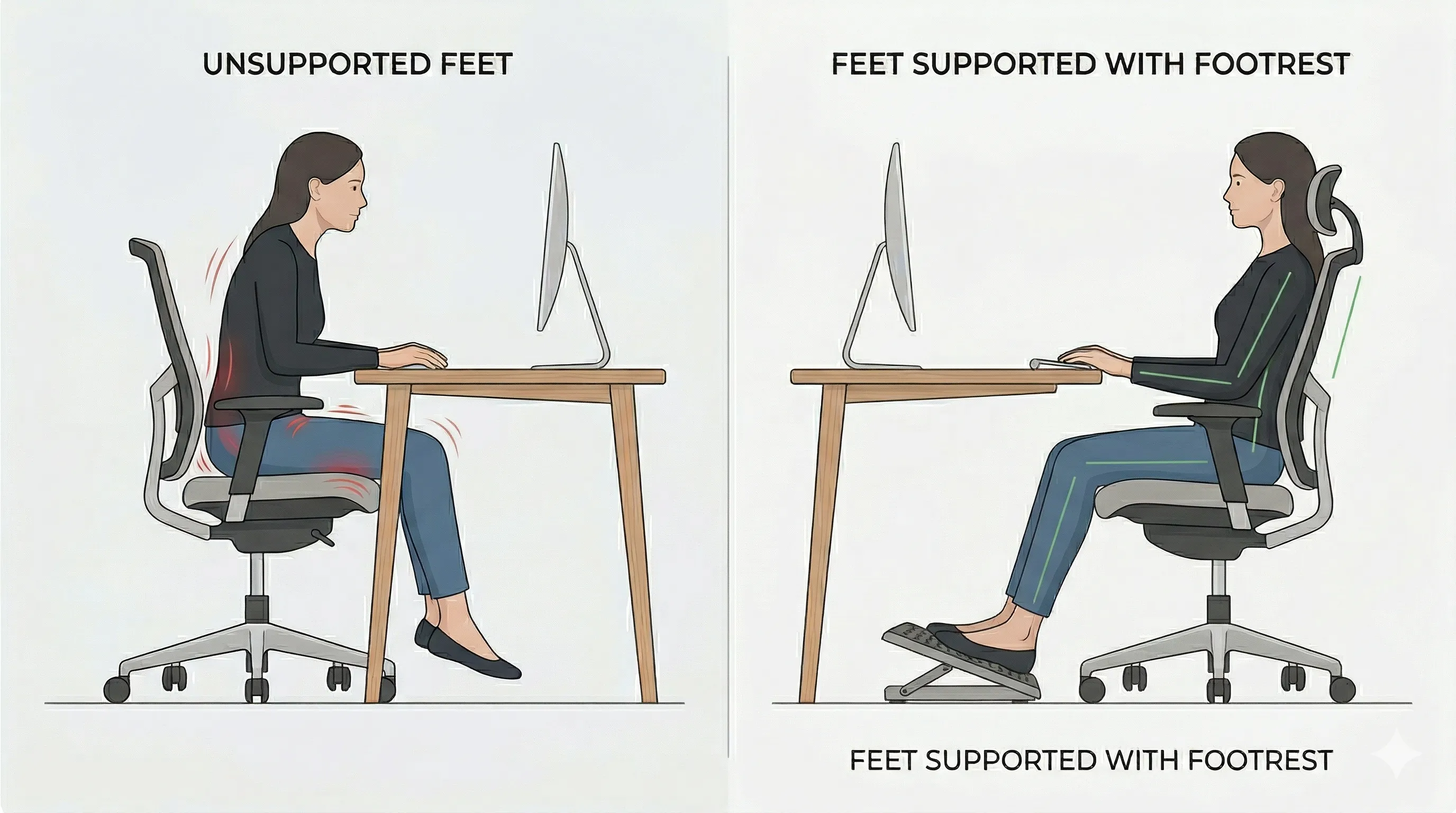
When your feet cannot rest comfortably on the floor, the rest of your body starts to compensate. You may shift forward in your chair, let your legs hang slightly, or feel the seat edge pressing more firmly into the backs of your thighs.
Over time, that can create pressure through the lower body, a sense of instability while sitting, or the feeling that you are never fully settled at the desk. A footrest helps by giving your feet a stable surface to rest on, which allows the legs to relax and reduces unnecessary pressure higher up the chain.
When a footrest actually helps
A footrest is most useful when your feet cannot rest flat on the floor after your chair is set well for the desk.
This often happens when:
- Your chair is raised to match desk height
- Your desk is too high relative to your body
- You are using a fixed-height desk with limited adjustment options
In those situations, lowering the chair enough to reach the floor would usually create new problems for the arms, shoulders, or wrists. A footrest fills that gap by supporting the feet without forcing you to compromise the rest of the setup.
When a footrest is not the real solution
Footrests are sometimes used to compensate for a setup that has not been adjusted properly yet.
If your chair is simply too high, if your chair height has not been set yet, or if your desk height is working against you, adding a footrest may improve comfort slightly without addressing the underlying issue.
The same is true if you tend to perch forward on the seat instead of sitting back with your thighs supported. In that case, the problem may be sitting position rather than foot support alone.
It usually makes more sense to adjust the setup first, then decide whether a footrest is still useful once everything else is reasonably aligned.
What a comfortable foot position should feel like
There is no perfect lower-body posture, but a supported setup usually feels steady rather than effortful.
A comfortable foot position generally allows:
- Your feet to feel stable and relaxed rather than braced
- Your thighs to stay supported without pressure at the seat edge
- Your knees to rest naturally without being pushed sharply up or down
You should not feel like your legs are hanging, reaching, or quietly holding tension just to stay in place. A footrest does not fix posture by itself. It simply removes one common source of lower-body strain.
Types of footrests and how to choose
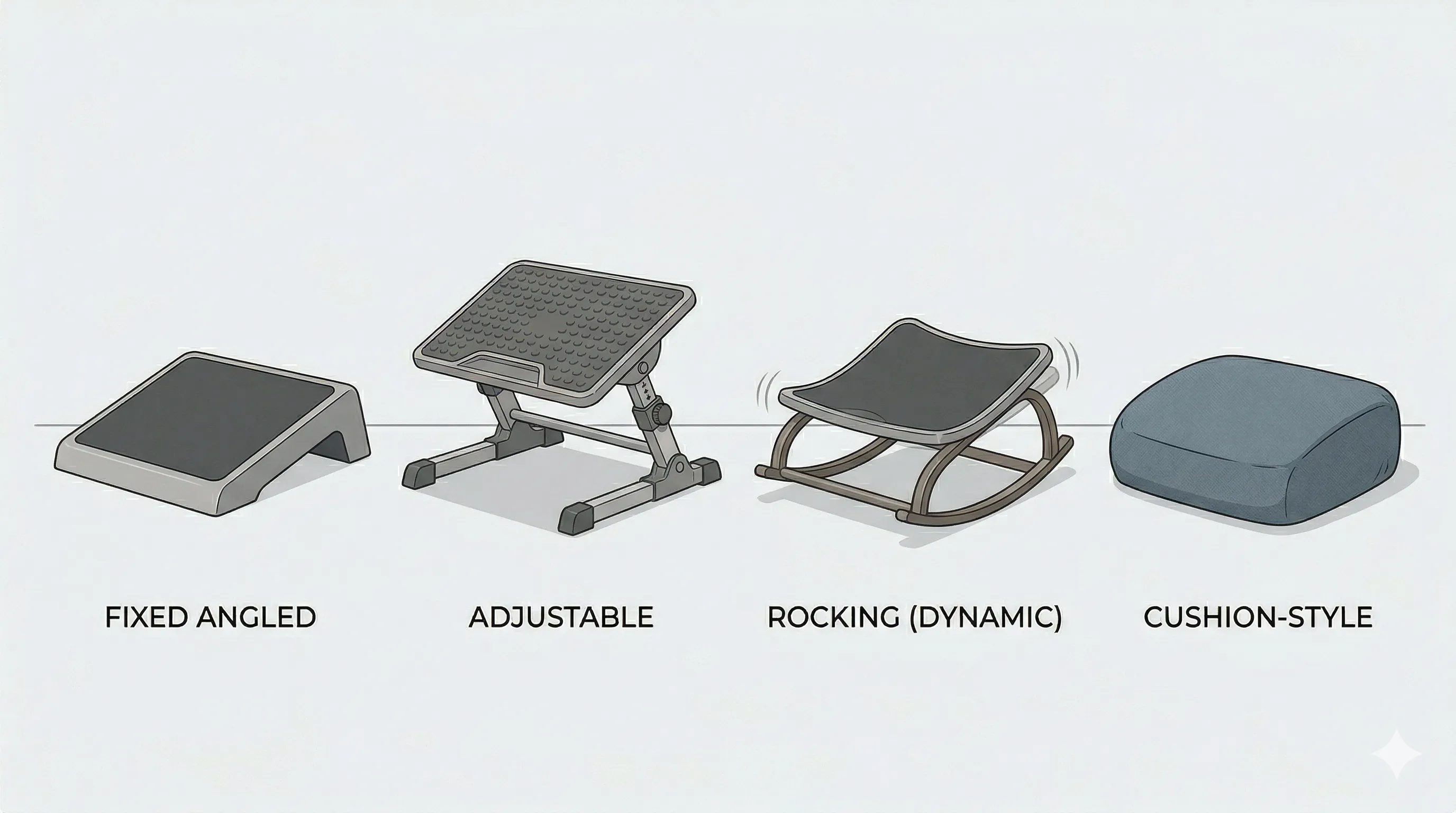
Fixed angled footrests
These provide a stable, slightly inclined surface with very little adjustment.
They tend to work well if you want consistent support and prefer a simple surface that does not move around under your feet. A straightforward option is the Fellowes Standard Foot Rest.
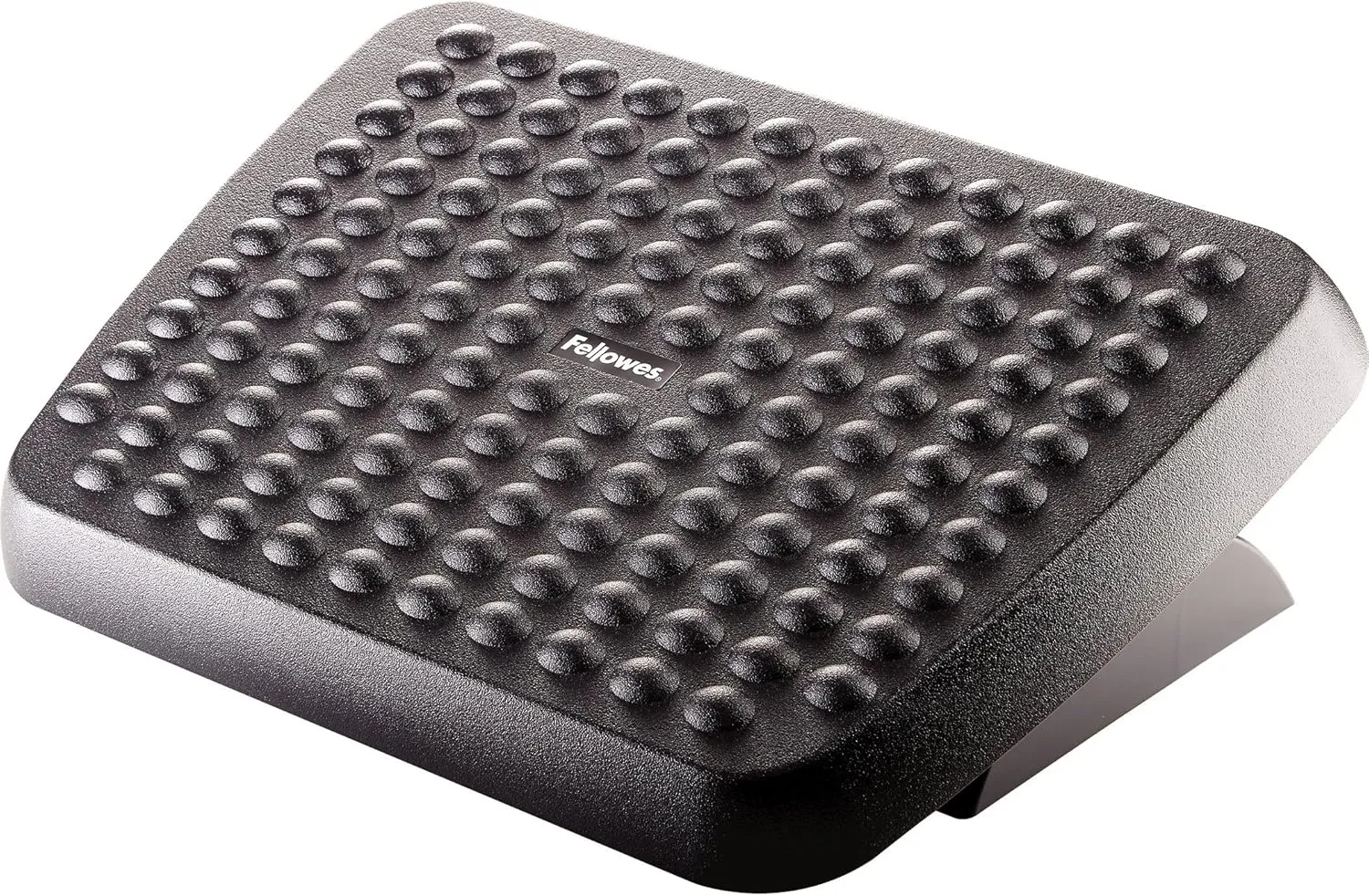
Fellowes Standard Foot Rest
A simple fixed angled footrest that works well if you want consistent, stable support without extra adjustments.
 Available at Amazon
 Adjustable height footrests
These let you change the height, angle, or both.
They are useful when you are still dialing in your setup, when more than one person uses the desk, or when you need a little more lift than a low fixed platform provides. One example is the HUANUO Adjustable Footrest.
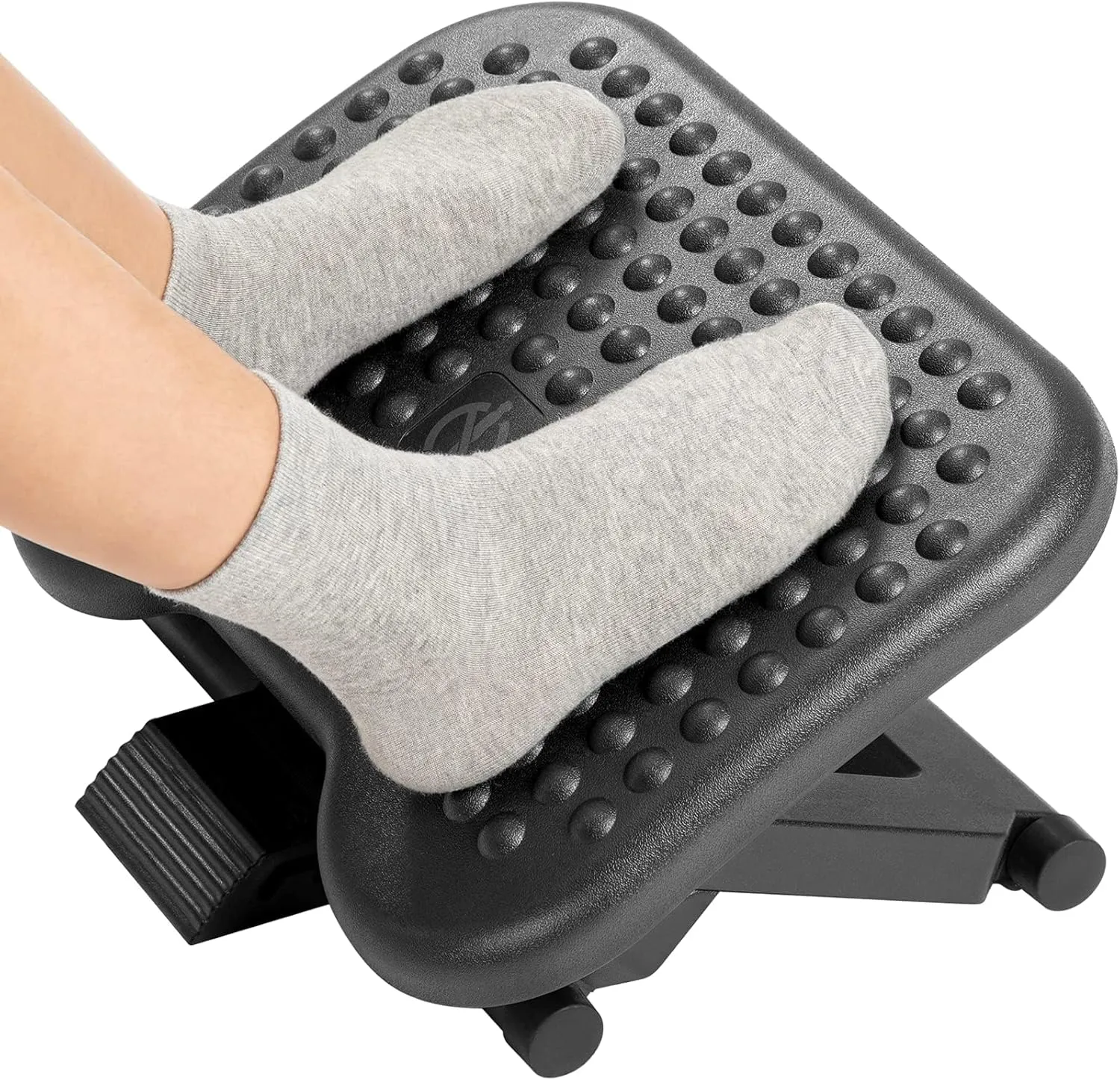
HUANUO Adjustable Footrest
An adjustable option that lets you fine-tune height and angle, which helps when more than one person uses the same desk.
Available at Amazon Rocking or dynamic footrests
These allow small movements while you sit instead of holding the feet in a fully fixed position.
They can suit people who fidget, prefer subtle movement, or feel better when they can shift pressure through the feet during the day. The Kensington SoleMassager Rocking Footrest is a typical example.
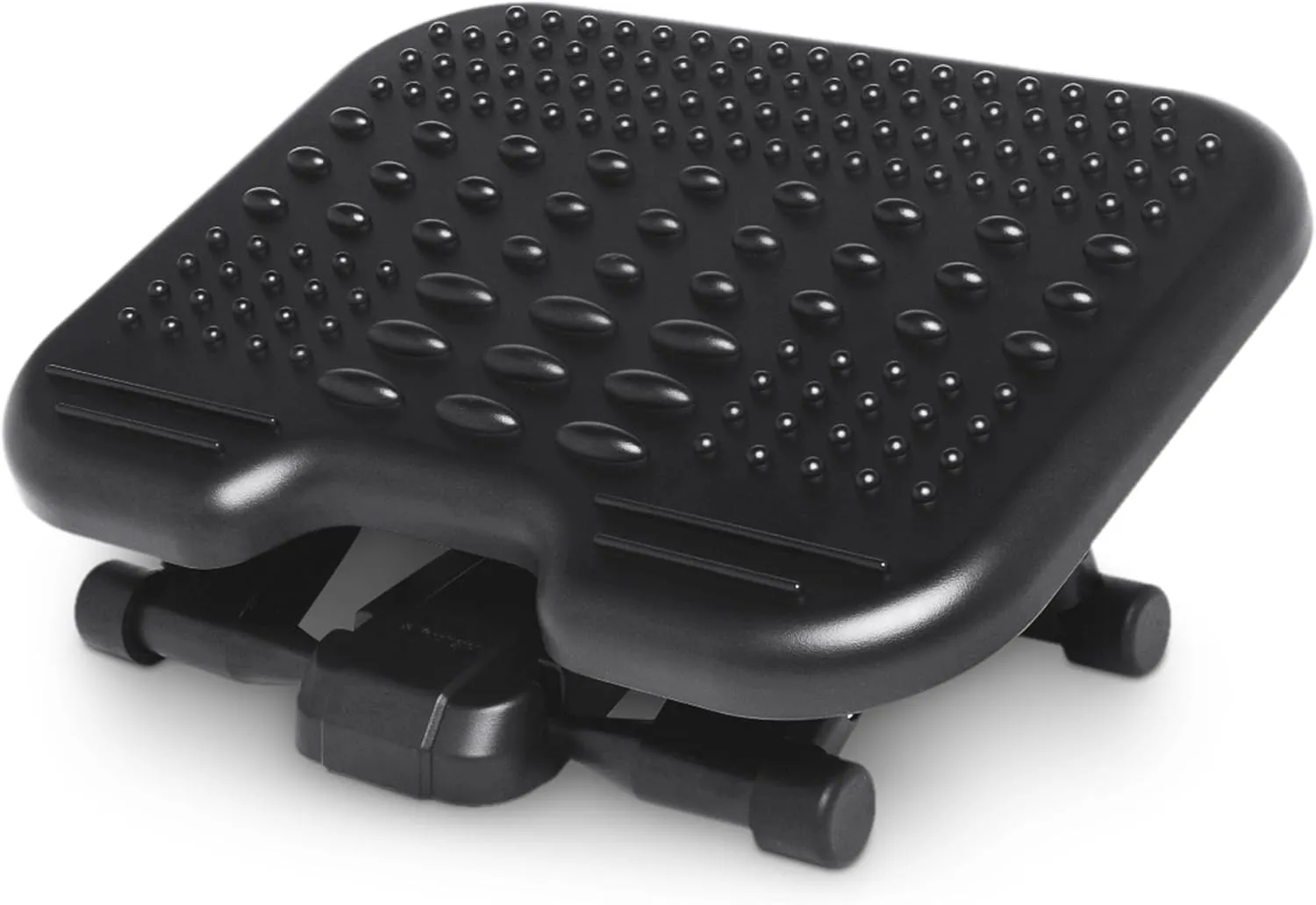
Kensington SoleMassager Rocking Footrest
A rocking footrest that allows subtle movement, which can help if you prefer not to keep your feet completely still.
Available at Amazon Soft or cushion-style footrests
These provide a softer surface instead of a rigid platform.
They are often chosen for comfort-focused setups, especially when you work barefoot or in socks and want light support rather than strong positioning. They tend to work best when you want a softer resting surface rather than extra height or a more fixed foot position.
Common footrest mistakes
One common mistake is choosing a footrest that is too high. That can push the knees upward and create more pressure under the thighs instead of reducing it.
Another is placing the footrest too far away, which makes you reach forward with the legs rather than letting the feet rest naturally underneath you.
People also sometimes expect a footrest to solve discomfort that is really coming from chair height, desk height, or general sitting position. In those cases, the footrest becomes a workaround rather than a clear improvement.
How footrests fit into your overall setup
Footrests are part of the lower-body side of workstation comfort. They work best when the rest of the setup is already reasonably settled.
They connect most closely with chair height, desk height, and sitting position. If those are off, a footrest can still help a little, but it usually will not feel like a complete fix.
For a broader view of how feet, knees, and thigh support interact, it also helps to read Lower-Body Ergonomics Explained.
Closing note
Footrests are not essential for every desk setup, but they can make a real difference when your feet are not properly supported. The useful question is not whether footrests are good in general. It is whether your setup leaves your lower body without a comfortable place to rest.
Once that is clear, choosing the right type becomes much easier.